Fear of the Talking Asshole
My last essay discussed anal eroticism through an artistic and philosophical lens. That analysis was universal, unmoored from identity markers like sex, gender, and sexual orientation. Everyone has an anus, after all; any serious attempt at anal philosophy should apply universally. Having laid this broad framework, however, we can begin to narrow our focus. The purpose of this essay is to acknowledge the fact that the anus is strongly associated with queerness—male queerness, in particular. And, given our current political climate, this makes the anus a profound source of anxiety and moral panic.

The Anus is your God
We’ve witnessed an explosion in the popularity of anal eroticism over the last few decades. Anal sex has become a mainstay in heterosexual pornography, and is increasingly popular in the heterosexual bedroom as well. Implied anal scenes have even found their way into a handful of popular films and TV shows. The mainstreaming of anal play has been accompanied by a flurry of think pieces, ranging from gleeful celebration all the way to moral panic. Strangely, there seems to be very little writing on the meaning of anal eroticism through an artistic and philosophical lens. This essay is the first in a series—my own effort to fill in that gap.
Don’t Put Your Penis Near the TV Remote
Some time ago, I saw a Fetlife post that stuck with me. It was a joke about those guys who post pictures of their dicks next to TV remotes, apparently imagining somebody might find such imagery compelling. The post was funny and any sane person would have chuckled at the joke and moved on. I am not a sane person. And a big part of my artistic project involves thinking deeply about smutty nonsense. So I ended up writing two thousand words on the subject of TV remotes in dick pics. Why? Because when you peel back the layers, there’s actually something really profound at the core of this conversion. The reason nobody likes to see a TV remote in a dick pic is because it violates a fundamental—but often unstated—principle of photography. Let’s dive in.
PotGirls
Our culture has been stagnant, aimless, and repetitive for more than a decade. Or at least it sometimes feels that way, with so much mainstream art focused on nostalgia, and modern cinema dominated by remakes, sequels, prequels, and reboots. And while it’s certainly true that lots of indie artists are sharing exciting work on social media, the most provocative contemporary art is often doomed to obscurity; algorithmic feeds have a tendency to flatten culture, weeding out anything too strange or ambiguous in favour of an endless stream of unobtrusive, unchallenging, and easily replicable sameness. In spite of this, there is one niche where the spirit of the avant-garde still feels alive and well: fetish art.
The Future of Art
Some of the most novel, vibrant, and radically transgressive contemporary art is not being shown in galleries, museums, or prestigious art fairs. Even mainstream social media platforms—ostensibly a democratizing force for art and culture—are either censoring, overlooking, or shadow-banning the most unorthodox developments in the art world today. If you want to find provocative imagery nowadays, you need to be keeping an eye on last niche where the spirit of the avant-garde is still alive and well: fetish art.

Waiting for Godot is Gay
Samuel Beckett’s Waiting for Godot has been mired in controversy since its opening night. As the story goes, the play’s first performance in 1953 was met with jeering and anger from the audience. “This is not theatre as we know it,” remarked one critic. Another dismissively characterized Waiting for Godot as a play in which “nothing happens, twice.” Nowadays, the piece is widely regarded as a masterpiece of absurdist theatre; however, critics remain staunchly divided in what, exactly, they think the play is trying to say. Here, I want to advance a somewhat controversial perspective: I think Waiting for Godot is a kinky gay love story.
What is Pornography?
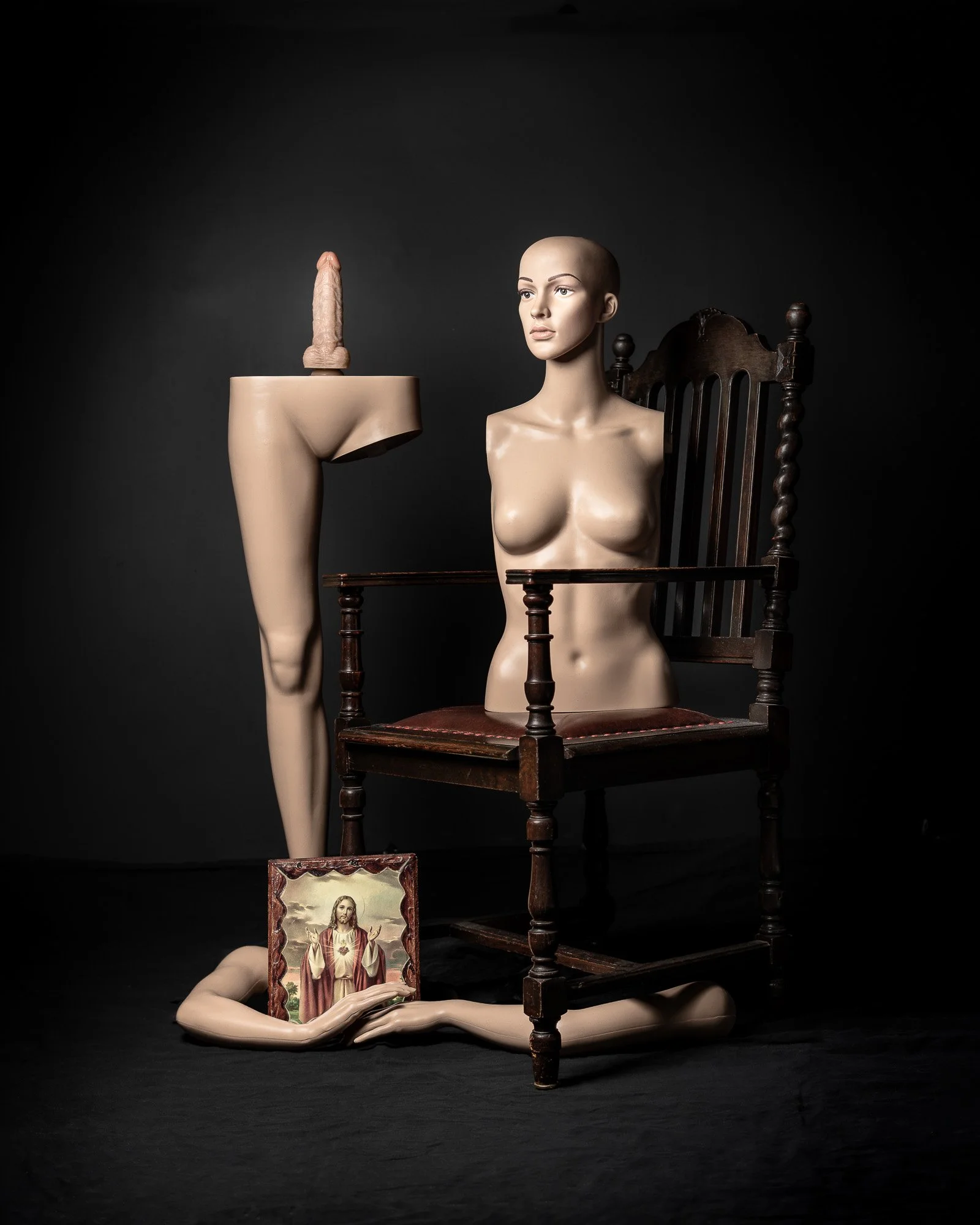
How should we distinguish between art and pornography? The question might appear frivolous at first glance; however, I would argue that this particular philosophical conundrum has acquired urgency in our current political climate, with fascism, prudishness, and moral panic on the rise around the world.